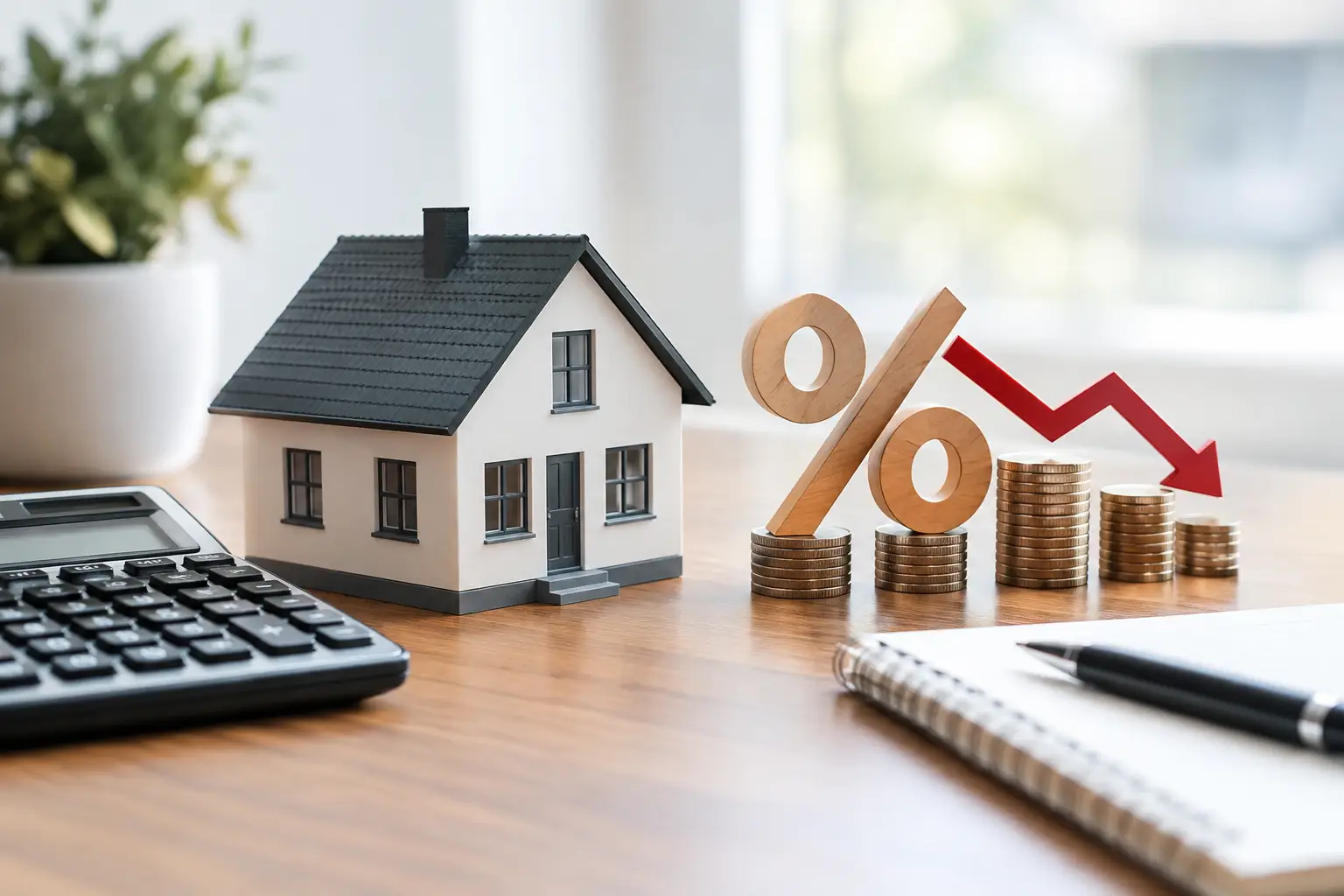
A higher interest rate can change the home price that feels comfortable, even when your income and down payment are solid. A mortgage rate buydown is one way to reduce that pressure by lowering your interest rate or monthly payment, either for the first few years of the loan or for its full term. The right choice depends on who is paying for it, how long you expect to keep the mortgage, and whether the upfront cost delivers a meaningful benefit to your budget.
What Is a Mortgage Rate Buydown?
A mortgage rate buydown is an upfront payment that reduces the interest rate charged on a mortgage. The payment may come from the buyer, seller, builder, lender, or another approved party. In many cases, the funds are part of the closing process and must follow the rules of the loan program.
There are two main approaches: a permanent buydown and a temporary buydown. They can sound similar because both can make a payment lower, but they work differently and should be evaluated differently.
A permanent buydown lowers the note rate for the life of the loan. It is commonly accomplished by paying discount points. One point equals 1% of the loan amount. The rate reduction you receive for each point is not fixed. It varies based on market conditions, loan type, credit profile, property type, and the lender’s pricing on the day you lock your rate.
A temporary buydown reduces the borrower’s payment for a limited period, often the first one, two, or three years. The loan’s permanent note rate does not change. Instead, money is set aside at closing to cover the difference between the reduced early payment and the full payment due under the note rate.
How Temporary Buydowns Work
The most familiar temporary structure is a 2-1 buydown. The interest rate used to calculate your payment is 2% lower in year one and 1% lower in year two. Beginning in year three, your payment is calculated at the full note rate for the remaining loan term.
For example, imagine a 30-year fixed-rate mortgage with a note rate of 6.5%. With a 2-1 buydown, your payment would be based on 4.5% in the first year, 5.5% in the second year, and 6.5% starting in the third year. Your principal and interest payment rises each year during the buydown period. Property taxes, homeowners insurance, mortgage insurance, and homeowners association dues, if applicable, are separate costs and may also change.
A 3-2-1 buydown follows the same idea over three years. The payment is calculated 3% below the note rate in year one, 2% below in year two, 1% below in year three, then at the full note rate after that. Less commonly, a 1-0 buydown reduces the payment for the first year only.
Temporary buydowns can be especially useful when a seller or builder is willing to contribute toward closing costs. Rather than asking for a lower purchase price, a buyer may negotiate a seller credit that funds the buydown, subject to program and contribution limits. This can create more immediate monthly payment relief without requiring the buyer to bring additional cash for the buydown.
The payment must still be affordable later
A lower first-year payment is helpful only if you are prepared for the full payment. Mortgage qualification generally considers the payment at the loan’s note rate, not just the reduced temporary payment. That is a safeguard: it helps prevent buyers from qualifying based on a payment that will soon increase.
Before moving forward, look at your expected payment in every buydown year. Build your budget around the highest scheduled payment, then treat the early savings as breathing room for moving costs, furnishings, emergency savings, or other financial priorities.
Permanent Buydowns and Discount Points
A permanent buydown may make sense when you expect to keep the mortgage long enough to recover the upfront cost through monthly savings. It can also appeal to buyers who value a lower fixed payment for the long run and have sufficient cash after the down payment, reserves, and closing expenses.
The key question is the break-even point. Divide the cost of the points by the monthly principal-and-interest savings. The result is the approximate number of months it takes for savings to equal the amount paid upfront.
Suppose paying $4,000 in points lowers your monthly principal-and-interest payment by $80. The simple break-even calculation is 50 months, or a little more than four years. If you sell the home, refinance, or pay off the loan before then, you may not recover the cost through payment savings. If you keep the loan well beyond that point, the long-term value may be stronger.
This calculation is useful, but it is not the whole decision. Using cash for points means that money is no longer available for your down payment, renovation plans, reserves, debt reduction, or investments. A slightly higher rate with stronger cash reserves can be the better financial choice for some households.
When a Buydown May Be a Smart Move
A mortgage rate buydown is not automatically good or bad. It is a pricing tool, and its value comes down to your plans and available funds.
A temporary buydown may be a strong fit if a seller or builder is funding it, you expect a near-term increase in income, or you want a more manageable payment while settling into a new home. It may also help buyers compete in a market where sellers prefer to preserve the contract price rather than reduce it.
A permanent buydown may be worth considering if you plan to hold the mortgage beyond the break-even point, have stable long-term financing goals, and do not need the cash for more urgent priorities. For an investor, the calculation may center on cash flow and holding period. For a primary-residence buyer, it may center on payment stability and household budget.
Neither option is ideal if it strains your cash position, if you expect to refinance soon, or if the proposed payment reduction is too small to justify the cost. Future interest rates are uncertain, so a refinance should be viewed as a possibility, not a plan that makes an expensive buydown automatically worthwhile.
Questions to Ask Before You Commit
A clear loan estimate and payment comparison can make this decision much easier. Ask your loan officer to show the cost with and without the buydown, the note rate, the payment for each year, and the cash needed at closing. You should also confirm who is providing the funds and whether seller or builder contributions are permitted for your loan program.
For a permanent buydown, ask for the break-even point and compare it with your likely time in the home and on the loan. For a temporary buydown, ask what happens to unused funds if you refinance, sell, or pay off the mortgage early. Program rules and loan documents govern that outcome, so it should never be assumed.
If you are comparing FHA, VA, conventional, jumbo, USDA, or investment-property financing, the details can differ. Loan program rules, contribution limits, occupancy, credit, and property type all affect whether a buydown is available and how it is structured. The lowest advertised rate is not always the lowest-cost choice once points, credits, fees, and your expected loan timeline are considered.
Make the Payment Decision With the Full Picture
A buydown should support your homeownership plan, not distract from it. The best option is the one that keeps your payment realistic, protects the cash you need after closing, and matches how long you expect to keep the loan. An experienced loan officer can model the alternatives side by side so you can choose with confidence and keep the focus where it belongs: building a home life that works for you.