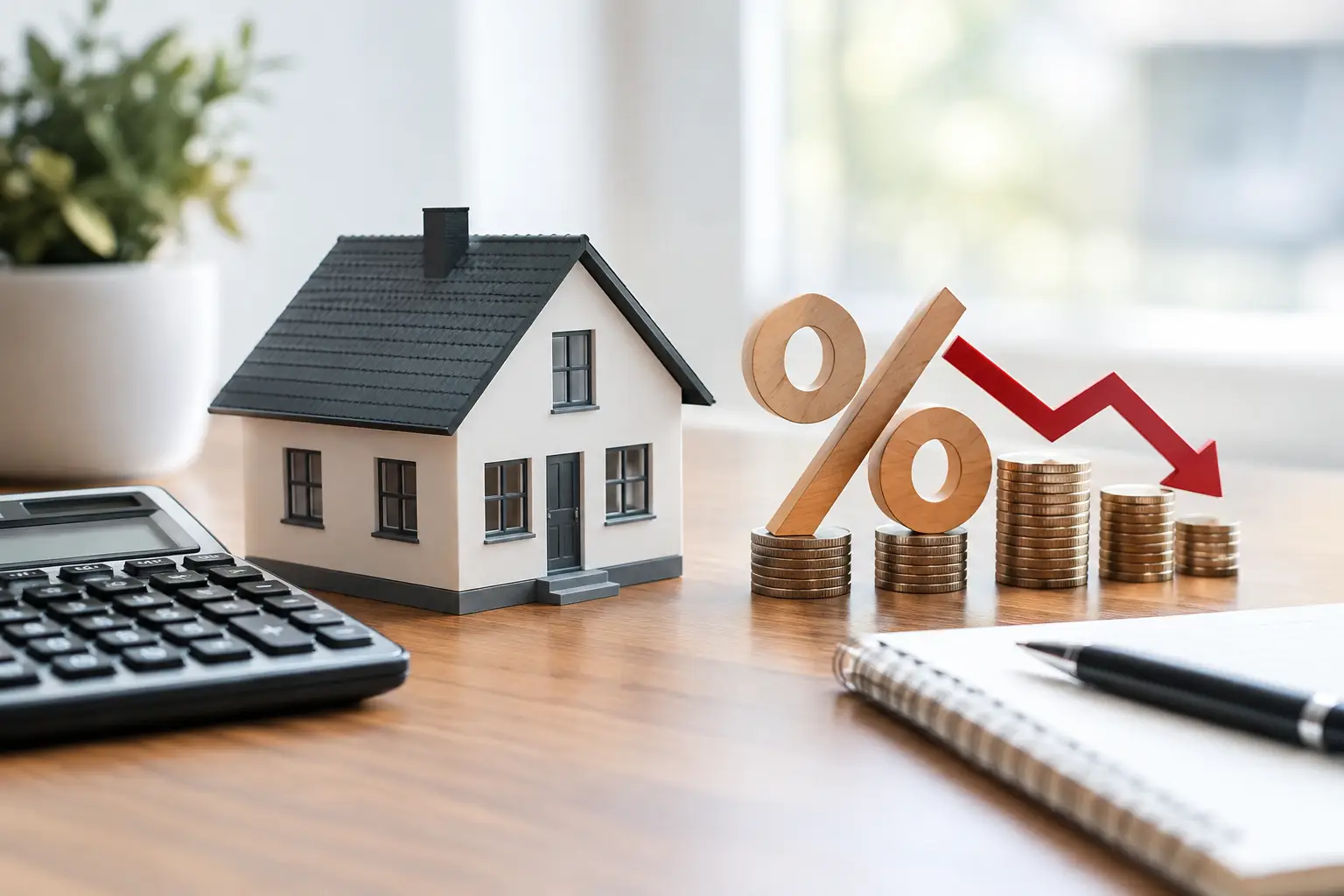
A mortgage rate can look like a small number on a loan estimate, but it influences one of the largest monthly commitments in your budget. Mortgage rates affect your payment, total interest cost, buying power, and sometimes the type of home or loan program that makes the most sense for your life.
The right question is not simply, “What is the lowest rate today?” It is, “Which loan structure gives me the strongest financial position for the way I plan to own this home?” The answer depends on market conditions, your finances, your timeline, and the details behind the advertised rate.
What Drives Mortgage Rates?
Mortgage rates do not move in a straight line, and they are not set by one lender alone. They respond to the broader cost of borrowing, especially the bond market and mortgage-backed securities. Inflation reports, employment data, Federal Reserve policy, and economic uncertainty can all influence how lenders price new loans.
That does not mean a change in a Federal Reserve announcement automatically creates the same change in a 30-year fixed mortgage rate. The Fed directly influences short-term borrowing costs. Mortgage pricing is more closely tied to the expected long-term path of inflation and the demand for mortgage-backed securities. Those forces often move together, but not always.
For buyers and homeowners, the practical takeaway is simple: rate movement is normal, and daily changes can happen. Waiting for a perfect moment can be risky when home prices, inventory, or your purchase deadline are also moving.
Your Personal Mortgage Rate Is Different From a Headline Rate
The rate in an advertisement is generally based on a specific borrower profile. It may assume excellent credit, a certain down payment, an owner-occupied single-family home, and payment of discount points. Your available rate is based on your complete application.
Lenders commonly consider your credit profile, loan amount, down payment or equity, debt-to-income ratio, property type, occupancy, loan term, and loan program. A primary residence may be priced differently than a second home or investment property. A condominium, multi-unit property, cash-out refinance, or high-balance loan can also affect pricing.
This is why comparing a headline rate to your personalized loan estimate is not an apples-to-apples exercise. A useful quote should reflect the loan you actually need, not a scenario that only works on paper.
How Mortgage Rates Change Your Monthly Payment
A lower rate usually reduces your principal-and-interest payment, but the rate is only one piece of affordability. Property taxes, homeowners insurance, mortgage insurance, homeowners association dues, and maintenance costs all deserve a place in your budget.
Consider a $400,000 30-year fixed loan. A difference of even half a percentage point can change the principal-and-interest payment by more than $100 per month, depending on the rates being compared. Over decades, that difference can add up to tens of thousands of dollars in interest.
Still, the lowest rate does not automatically produce the lowest-cost loan. A lender may offer a lower rate with points, which are upfront fees paid at closing to reduce the interest rate. If you expect to sell or refinance before you reach the break-even point, paying points may not make financial sense. If you plan to keep the mortgage for many years, the upfront cost may be worthwhile.
Ask for both the monthly payment and the cash required to close. Then ask how long it would take for the monthly savings to recover any points or lender fees. That calculation turns a rate quote into a decision you can evaluate.
Mortgage Rates by Loan Type
Loan programs are designed for different borrower needs, so their rates and costs can vary. A conventional loan may be a strong fit for borrowers with solid credit and a down payment that helps them avoid or eventually remove private mortgage insurance. FHA financing can provide a path to homeownership with more flexible credit and down payment guidelines, though mortgage insurance costs should be considered.
Eligible veterans, active-duty service members, and surviving spouses may find that VA loans offer meaningful advantages, including no required down payment in many cases and no monthly mortgage insurance. USDA loans can support eligible buyers purchasing homes in qualifying rural areas. These programs have location, income, property, and eligibility rules that matter just as much as the rate.
Jumbo loans serve home purchases above conventional conforming loan limits. Their pricing can be competitive for well-qualified borrowers, but underwriting often requires stronger reserves, income documentation, or credit profiles. For self-employed buyers and borrowers with nontraditional income, non-QM options may offer a more practical path when conventional documentation rules do not reflect their full financial picture.
For investors, DSCR loans assess whether a property’s expected rental income can support the debt payment. Rates and fees may be different from a primary-residence mortgage because the transaction is evaluated as an investment. The best program is not always the one with the smallest advertised percentage. It is the one whose qualification rules, costs, and repayment terms match the property and your strategy.
Fixed vs. Adjustable Rates: Choose for Your Timeline
A fixed-rate mortgage keeps the interest rate the same for the life of the loan. That predictability can be valuable for buyers who want a consistent principal-and-interest payment and expect to own the home for a long time.
An adjustable-rate mortgage, or ARM, begins with a fixed period and then can adjust at scheduled intervals. An ARM may offer a lower introductory rate than a comparable fixed-rate loan, which can be appealing if you expect to sell, relocate, or refinance before the adjustment period begins. The trade-off is future uncertainty. If rates are higher when the loan adjusts, your payment could increase.
The decision should be based on a realistic ownership timeline, not an optimistic guess. Review the initial fixed period, adjustment frequency, rate caps, index, margin, and the highest possible payment. A lower starting payment is helpful only if you understand what could happen next.
When Should You Lock a Mortgage Rate?
A rate lock protects your agreed-upon rate for a set period while your loan is processed. Lock periods often range from a few weeks to several months. The right length depends on the expected time to close, the property, the complexity of your file, and whether you are purchasing or refinancing.
Locking can provide certainty when you are comfortable with the payment and need to protect your budget from market swings. Waiting may pay off if rates improve, but it can also expose you to a higher rate. No one can reliably call every market move.
For a purchase, consider your contract closing date first. A lock that expires before closing can create added cost or stress. For a refinance, consider the break-even point and whether the new payment and total loan costs meet your goal, rather than trying to capture the lowest possible day on a rate chart.
Questions Worth Asking Before You Lock
Before choosing a loan and lock period, make sure you understand whether the quoted rate includes points, the annual percentage rate, estimated lender fees, mortgage insurance, and the payment after taxes and insurance. Ask what could change before closing, such as a credit change, appraisal issue, property change, or a different loan amount.
Also ask whether a float-down option is available if rates improve after you lock. These options vary and may have conditions or fees, but they can be useful in certain market environments. Clear answers early can prevent surprises later.
A Better Way to Compare Mortgage Offers
A rate alone is not a complete mortgage comparison. Review the loan estimate line by line and compare the same loan amount, term, occupancy, property type, lock period, and closing date. Then look at the interest rate, APR, points, lender fees, monthly payment, mortgage insurance, and cash to close together.
APR can be helpful because it incorporates certain finance charges, but it is not a replacement for reviewing the full estimate. It is especially important to understand upfront costs if you may refinance or sell within a few years. A loan with a slightly higher rate and lower fees can sometimes be the better choice for a shorter ownership horizon.
A knowledgeable loan officer can model these trade-offs around your actual plans, whether you are buying your first home, relocating, using VA benefits, refinancing for a lower payment, or financing a rental property. Better Lending combines a broad range of loan options with one-on-one guidance so the conversation can focus on fit, not just a single rate.
The most helpful next step is to define what success looks like for your mortgage: a lower monthly payment, less cash needed at closing, a faster payoff, more purchasing power, or flexible financing for a unique situation. Once that goal is clear, you can evaluate mortgage rates with confidence and choose terms that support the home and future you are building.